Celebrating National Health Center Week!
In celebration of National Health Center Week, here are five amazing facts you might not know about the Health Resources and Services Administration (HRSA) Health Center Program and the health centers within it, both Federally Qualified Health Centers (FQHCs) and FQHC Look-Alikes.
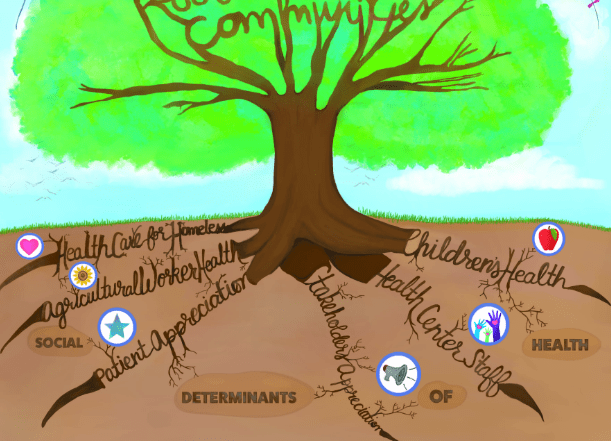
This week, August 4-10, marks National Health Center Week – a time when community health centers and their supporters are raising awareness about the mission and accomplishments of America’s health centers. The theme for this year’s celebration is “America’s Health Centers: Rooted in Communities,” showcasing the deep “roots” that the health center movement has within our communities.
In celebration of National Health Center Week, here are five amazing facts you might not know about the Health Resources and Services Administration (HRSA) Health Center Program and the health centers within it, both Federally Qualified Health Centers (FQHCs) and FQHC Look-Alikes.
1. The Health Center Program is More Than 50 Years Old
Did you know that, back in 1965, the Health Center Program started with just two clinics?
It’s true. The health center program emerged more than 50 years ago out of the deep poverty and lack of access to care plaguing so many American communities. Inspired by the community health model he witnessed in South Africa, a young doctor named H Jack Geiger and other civil rights and community health activists sought funding from the federal Office of Economic Opportunity to establish similar health centers in low-income, medically-underserved communities.
Funding for the very first two of these neighborhood health centers was approved in 1965, and two clinics, one in Boston, Massachusetts, and one in Mound Bayou, Mississippi, opened. Thus, the Community Health Centers Program was officially launched, thanks to the determination of community health, anti-poverty, and civil rights activists to improve the health and well-being of all residents.
2. Health Centers Now Serve Over 28 Million Individuals
Health centers have grown tremendously in the last 50 years – especially over the last 20 years. Today, there are nearly 1,400 health centers, which operate more than 11,000 sites nationwide, serving over 28 million low-income individuals in need of comprehensive primary care, oral health care, and behavioral health care, as well as other services such as transportation, patient education, and vision services.
Nationally, health centers serve 22% of the entire uninsured population. In addition to the general low-income and uninsured or underinsured populations, they also serve many special and vulnerable populations, including:
✔ 8 million US children
✔ 1.3 million individuals experiencing homelessness
✔ 3.4 million public housing residents
✔ Approximately 20% of the US migrant/agricultural worker population
✔ 350,000 veterans
To learn even more about the individuals served by health centers, check out this amazing chartbook of data developed by the National Association of Community Health Centers (NACHC) and released in January.
3. Health Centers Are Data Mavens
Speaking of data, health centers keep track of a huge amount of valuable data. Every year, program grantees as well as look-alikes have to report on their performance using a standardized tool call the Uniform Data System (UDS), which allows for consistent information to be submitted and analyzed across health centers.
Where can this data be found? Aside from within the internal quality team’s files and electronic health records of a given health center, UDS data is publicly available in a few places:
- The HRSA website is one great place to find UDS data. Longitudinal clinical quality and patient demographic data can be found by health center or by state and national averages. HRSA also includes a number of badges for health centers that have achieved certain designations or quality awards, such as being a Health Center Quality Leader.
- UDS Mapper is another such place, especially if you like visualizing data on maps. This free site allows you to make maps with all sorts of UDS data, including health center and hospital locations and percent of a zip code’s low-income patients who are served by different health centers. You can also show demographic data from other, non-UDS sources, like poverty, uninsurance rates, and rates of various diseases.
UDS data can be super useful in comparing a health center to itself over time, to other health centers, or to trends in its community. Thank goodness for this robust data keeping!
4. Health Centers Are Innovators
If you think it is remarkable that health centers charged with serving a low-income population excel at data collection, then you may be surprised to learn that FQHCs are at the forefront of many initiatives and trends in modern medicine. For example:
- By 2012, nine out of ten health centers had adopted an electronic health record, while only 71% of office-based physicians had done the same.
- Similarly, an impressive 75% of health centers have achieved Patient-Centered Medical Home recognition, which has been slower to take hold in private practices.
- Nationally, 44% of health centers were providing telehealth services in 2017 for services ranging from primary care to behavioral health to specialty care – and that number is expected to increase.
For a great video that shares not only the history of health centers but showcases the way they are innovative leaders into the future, check out this 2015 NACHC video on health center’s value for today and tomorrow.
5. Health Centers Are Patient- and Community-Driven
The last – and perhaps the most important – of these five facts about health centers is that they are truly patient- and community-driven. Patients and community members are essential to the success of health centers in several ways.
Firstly, health center boards of directors are required to be at least 51% patients of the health center. That’s right – these boards cannot just be lawyers and bankers and other donors to the organization. Actual health center patients seen in the last 24 months must make up a majority of the board, and even those individuals who are not patients – and perhaps are lawyer or donors – need to identify if they live or work within the community, and how they are connected to the community.
Secondly, health center patient feedback should be part of a health center’s quality improvement process, with mechanisms to gather patient satisfaction data like a survey, and with ways for staff and board committee members to make changes based on the feedback. Hopefully the board’s quality committee also includes a patient board member or two!
Finally, health centers have to conduct needs assessments of their communities every three years. This means more than just crunching demographic data; a true, robust mixed-methods need assessment – which HRSA prefers to see – includes patient and community perspectives through interviews, focus groups, or surveys. These qualitative methods can provide a much deeper appreciation for the barriers patients and community members face and what the health center can do to address them.
Want to learn more about how to improve your grant-readiness and avoid the last-minute scramble and costly grants mistakes? Click here for a copy of LHF’s new guide: “Top Three Things to Do Today to Improve Your Grant-Readiness for Tomorrow.”